Mostrando postagens com marcador Tea Party. Mostrar todas as postagens

segunda-feira, junho 17, 2013

Por um Tea Party Brasil

Rodrigo Constantino

Muitos me perguntam por que eu tenho atacado tanto as manifestações que tomaram conta das principais capitais, em vez de tentar aproveitar a insatisfação das pessoas para canalizar tais passeatas na direção da mensagem liberal. Esse artigo é minha tentativa de resposta.

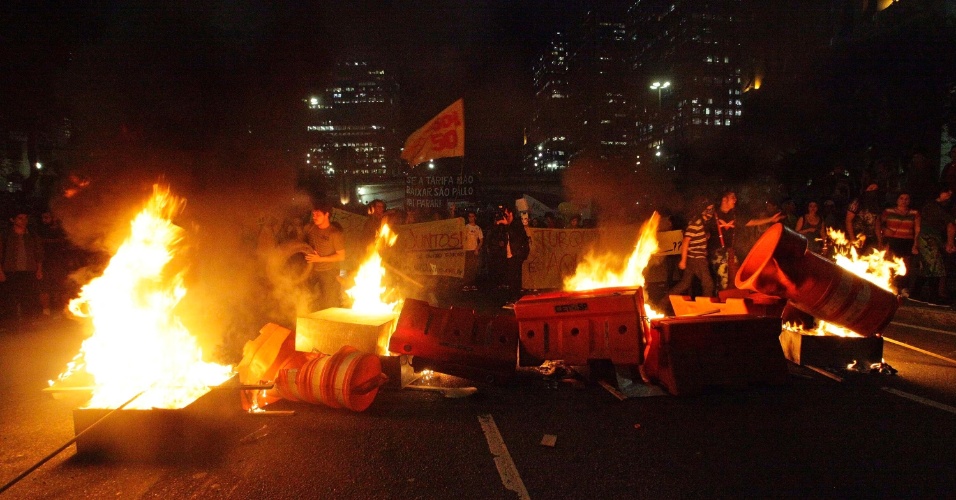
Em primeiro lugar, fiquei desconfiado desde o começo com a coisa toda. Não vi espontaneidade ali, tampouco demandas razoáveis. O que vi, ao contrário, foram grupos de extrema esquerda liderando a farra violenta, e bandeiras ridículas, como o “passe livre” (quantas vezes teremos de repetir que não existe almoço – ou transporte – grátis?).

Mas entendo que a coisa ganhou vulto maior. Agora, trata-se de um protesto mais abrangente, contra “tudo que está aí”, contra a corrupção, o caos do transporte público, a derrota do seu time de futebol, o final da novela, o pé na bunda da namorada etc.

Brincadeiras à parte, claro que há inúmeros motivos para estar muito insatisfeito com os rumos desastrosos de nosso país sob o governo petista, e sou o primeiro a reconhecer e apontar isso. Logo, faria todo sentido, a princípio, tentar capturar esse clima de insatisfação geral em prol da mensagem liberal. Mas calma.

Liberais, por definição, não são agitadores das massas, tampouco endossam passeatas que transformam a vida do cidadão em caos, incluindo baderna, vandalismo e ataques à polícia. Unir-se a essa turba, que inclui, sem dúvida, muita gente séria e bem-intencionada, pode simplesmente manchar a imagem dos liberais. O tiro pode sair pela culatra.

Dar as mãos aos oportunistas da extrema esquerda, representada pelo PSOL e companhia, pode significar uma mistura abjeta que só prejudicaria o movimento liberal. E não vejo como se apropriar dessas manifestações sem essa parceria, ou pior, sem eles saírem como os grandes representantes do circo, até porque essa é a especialidade deles.

Por isso, basicamente, eu venho condenando essa tática perigosa de se aproveitar do clima de revolta e tentar incutir as bandeiras liberais ali, no meio da baderna toda. Essas manifestações nasceram com as impressões digitais dos esquerdistas, dos agitadores de multidões, com suas mensagens populistas. O DNA deles está lá. A coisa toda já começou torta. E agora temos artistas da esquerda caviar e até Zé Dirceu fazendo coro. Vamos nos juntar a essa gente?

Não! Liberais devem continuar sendo liberais em sua essência, sem cair na tentação de fazer um pacto com o diabo e instigar a adrenalina das massas, só porque o atual governo pode sair chamuscado disso. Esse clima de desordem não nos interessa. Nossa luta é dentro da legalidade, do estado de direito, no campo das ideias. Não somos como eles. Não atiçamos a faísca da revolução que pode se transformar em fogaréu desgovernado. Somos mais responsáveis que isso.

Sim, há cada vez mais gente descontente, vaiando a presidente. Isso é bom! Sinal de que, finalmente, a ficha pode estar caindo para alguns. Devemos aproveitar isso para explicar o que levou a esse cenário, e como revertê-lo. Devemos mostrar que a saída é o liberalismo, e não mais intervenção estatal. Mas devemos fazer isso de forma civilizada, sem sacrificar nossos valores mais caros em troca do tumulto momentâneo.

Essas manifestações têm toda cara de Occupy Wall Street. Os liberais devem rejeitar esse tipo de coisa. O que precisamos aqui é de um Tea Party, um movimento muito mais sério, com bandeiras legítimas e embasadas, com lideranças decentes e propostas concretas e robustas. A grande imprensa sempre demonizou o Tea Party e enalteceu o Occupy Wall Street. A grande imprensa, quase sempre com viés de esquerda, aprecia mensagens sensacionalistas que instigam as massas. Nós não desejamos isso.

Liberais de todo o Brasil, uni-vos! Mas não ao lado de baderneiros, não junto de gente que joga pedras em policiais ou quebra propriedade alheia. Não somos como o PSOL ou o PSTU, a UNE ou a CUT. Não somos massa de manobra de oportunistas de plantão. Não somos filhotes de Robespierre.

Nós somos melhores do que isso. Nós apelamos à razão de nossos leitores e ouvintes. Não nos interessa jogar lenha na fogueira dos vândalos e anarquistas. Vamos rechaçar qualquer movimento semelhante ao Occupy Wall Street. E vamos, com seriedade e paciência, plantar as sementes de um Tea Party brasileiro. Somente uma oposição responsável e organizada poderá derrotar o projeto de poder petista no local certo, que é a urna.  

domingo, outubro 16, 2011

Tempos perigosos

Vídeo onde comento os crescentes movimentos de protesto mundo afora, cada vez mais radicais, capturando toda a indignação (em parte legítima) das pessoas contra o "sistema". Alguns culpam o capitalismo, outros Wall Street, e outros o welfare state. O fato é que este clima é propício para "soluções mágicas", revoluções que muitas vezes levam a sistemas ainda piores.

sexta-feira, agosto 19, 2011

The Tea Party's Achilles' Heel

By YUVAL LEVIN AND PETER WEHNER, WSJ

The tea party movement has been a profoundly positive force in American political life. It has recast the political debate to put the country's fiscal problems front and center, helped to drive a historic midterm election, and begun to put the brakes on the Obama administration's reckless spending.

Two years ago, all the focus in Washington was on how much to spend; today it is on how much to cut. The tea party freshman in the House of Representatives, together with more senior like-minded members, prevented the Republican leadership from agreeing to deals that would have increased taxes in exchange for largely illusory cuts. As a result, the debt-ceiling deal was significantly better than it would otherwise have been. Next year, discretionary spending will be, in absolute terms, less than it was this year—a small first step, but an important one.

But the next test, and the real test, for the tea party movement is whether it can channel its energy into entitlement reform—and specifically the reform of Medicare. The reason is simple: Our debt explosion is a health-entitlement explosion. Between now and 2050, according to the Congressional Budget Office, spending on federal health programs—Medicare, Medicaid and the new ObamaCare entitlement—will grow to 13% of gross domestic product from 5.6%, while all other federal spending combined will actually decline as a share of the economy.

The crushing and unprecedented coming debt crisis—which will see the national debt grow to more than twice the size of the economy, strangling our economic future—cannot be averted unless health-care costs are brought under control, and that cannot be done unless the basic structure of the Medicare program is reformed. If we ignore Medicare, we ignore the debt problem.

Unless the tea party movement is willing to step up to the plate on this issue, its members cannot really be considered champions of limited government or defenders of America's future prosperity. There is a very real danger that members of the movement will get distracted by side issues (cutting foreign assistance, for example, which wouldn't move the needle on our long-term debt) or will cling to untenable stands (opposing in principle any increase in the debt ceiling) while avoiding the entitlement debate.

Rep. Michele Bachmann (R., Minn.), winner of the Iowa straw poll and a heroine of the tea party movement, is a perfect example of this. She claims she has a "titanium spine" when it comes to fiscal matters, portraying herself as a crusader on behalf of smaller government. But is she really?

Rep. Paul Ryan (R., Wis.), chairman of the House Budget Committee, has put forward a plan that would transform the fee-for-service structure of Medicare, which is the chief driver of inefficiency in our health-care system, into a system of defined-contribution health benefits. It is the best, most far-reaching reform of health-care entitlements on the table. Yet when asked about Mr. Ryan's Medicare plan, Mrs. Bachmann's titanium spine seems to fold.

She has said she supports the Ryan budget's discretionary cuts but puts "an asterisk" over its Medicare reform. "We have to make sure going forward with senior citizens, that we're focusing on a higher quality of life, dealing with cures for instance for senior citizens," she told one interviewer.

If Mrs. Bachmann is worried that Mr. Ryan's reforms would not address her concerns, then there are other approaches to choose from. But she has declined to offer or endorse any, expressing only vague support for a small increase in the retirement age and greater means testing—neither of which would make a real dent in Medicare's growth, since neither would reform the grossly inefficient payment system that causes costs to explode throughout the health sector. An asterisk is not enough.

Meanwhile, Mrs. Bachmann voted against not only the debt-ceiling deal engineered by Speaker John Boehner (R., Ohio) but also the House Republican Study Committee's "Cut, Cap, and Balance" bill on the grounds that they didn't cut government spending enough.

A posture of bold fiscal conservatism is simply not compatible with timid evasions on Medicare reform. The combination may be politically convenient, but it is substantively incoherent. And it's not just Mrs. Bachmann who has done this—most of the GOP presidential candidates have as well. Virtually every speech they give is laced with promises to tame our deficit and debt, to scale back the size, scope, reach and cost of government. Yet they have little to say when it comes to fixing the fundamental structure of our health entitlements. They want to will the ends but not the means to those ends. And that just won't do.

There are of course serious political dangers in tackling entitlements. But a responsible governing party needs to confront not only our easiest problems but also our most important ones. The tea party movement has been indispensable in forcing Republicans (and through them forcing Washington) to start reversing the rampant spending of the last few decades. It can now do the same with respect to the far greater spending explosion looming over the next few decades—holding politicians, including presidential candidates, to a high and principled standard when it comes to addressing our fiscal problems. It can educate voters about our entitlement crisis and demand that office holders and candidates explain what they will do to fix the problem, and especially to reform Medicare.

If the tea party movement does this, it will take its place among the great, constructive political movements in U.S. history. If it doesn't, it will be judged to have been fundamentally unserious when it came to reining in the spending Leviathan.

Mr. Levin is editor of National Affairs and a fellow at the Ethics and Public Policy Center. Mr. Wehner is a senior fellow at the center and a managing director of e21.

sábado, agosto 13, 2011

Uma lição de democracia

João Luiz Mauad, O GLOBO

“O fato de que estamos aqui hoje para debater o aumento do limite da dívida americana é um sinal de fracasso das nossas lideranças. É um sinal de que o governo dos Estados Unidos não pode pagar suas próprias contas. É um sinal de que agora dependemos da assistência financeira de países estrangeiros para financiar as políticas fiscais irresponsáveis do nosso governo.... O aumento do limite da dívida da América nos enfraquece nacional e internacionalmente. Liderança significa responsabilidade pelas próprias dicisões. Em vez disso, Washington está jogando o ônus de suas más escolhas de hoje nas costas dos nossos filhos e netos. A América tem um problema com a dívida e uma falha de liderança. Os americanos não merecem isso. Eu, portanto, sou contra o aumento do limite da dívida.”

Sabe de quem são essas duras palavras, caro leitor? Acredite, o discurso acima foi proferido pelo então senador Barak Obama, ainda em 2006, quando o Congresso daquele país discutia o limite da dívida federal, durante o mandato de George W. Bush. Na época, o aumento aprovado trouxe o teto da dívida para US$ 9 trilhões. Sob a presidência de Obama, o número já fora elevado para US$ 14,3 trilhões. Antes do recente aumento, portanto, a dívida já estava 60% maior do que quando ele sinalizava um suposto "fracasso de liderança", há cinco anos.

Malgrado a enormidade dos números, os políticos norte americanos chegaram a um acordo, ao apagar das luzes, evitando assim que o governo daquele país ficasse inadimplente perante os seus credores internos e externos. Entre mortos e feridos, salvaram-se todos – pelo menos por enquanto.

Durante a longa queda de braço, fomos bombardeados por notícias e comentários - ecoados principalmente do notório New York Times, carro-chefe da mídia liberal (esquerdista) americana, à frente o estridente “nobelado” Paul Krugman - acerca do radicalismo e irresponsabilidade dos conservadores, capitaneados pelos fundamentalistas/terroristas do Tea Party, que insistiam numa postura de prudência e parcimônia – oh! Grande heresia! - em relação aos gastos do governo e, consequentemente, em relação à dívida pública. Aliás, os economistas podem discordar sobre o montante da dívida que um governo pode carregar com segurança, mas há certo consenso de que 100% do PIB é demais, especialmente quando se olha para os efeitos sobre a atividade econômica.

Mas os ditos radicais do Tea Party cometeram o supremo pecado de contrariar São Obama e, principalmente, a visão progressista segundo a qual quanto mais o governo gasta e se intromete na vida privada das pessoas, melhor para todo mundo. Embora seja muito difícil para qualquer pessoa de bom senso entender como é possível que um endividamento constante e progressivo do governo possa ser algo sadio, o que se viu foi o linchamento sem trégua dos atrevidos que se recusavam, constitucional e democraticamente, a dar carta branca para o executivo gastar a vontade.

Neste ponto, pode ser útil esclarecer exatamente sobre o quê estavam discutindo os dois lados. A questão não era propriamente se o governo federal deveria ou não expandir os seus gastos. Quase ninguém em Washington propôs o encolhimento do leviatã. Ao contrário, no final de dez anos tanto os gastos nominais quanto a dívida total serão bem maiores do que são hoje. Tenha-se em mente ainda que esses aumentos virão após uma das mais rápidas expansões de gastos federais na história dos EUA – desde que Obama tomou posse, houve um aumento de aproximadamente 30% em relação ao último ano de Bush.

Ademais, pouco se falou sobre isso, mas durante a maior parte do tempo o impasse esteve ancorado não no radicalismo do Tea Party, mas na intransigênsia do presidente, que insistia, mesmo contra a opinião majoritária do seu próprio partido, em aprovar limites muito maiores, além de aumentos de impostos.

Finalmente, pode-se discutir o que for, mas não é apropriado dizer que não havia legitimidade do legislativo para debater o tema, afinal eles foram eleitos exatamente para isso. Ao contrário da escatologia do NYT, a verdade é que o Congresso americano deu uma lição de democracia ao mundo, apesar do comportamento malsão de Obama, que, com discursos irresponsáveis, insistia em jogar a opinião pública contra os congressistas. Quisera eu que os nossos políticos discutissem os temas importantes da nação como fizeram os yankes, sem barganhas por cargos, liberação de verbas ou mensalões, mas apenas defendendo o que consideram melhor para o país.

terça-feira, agosto 09, 2011

O movimento Tea Party

Rodrigo Constantino, O GLOBO

“Somente no bizarro mundo de Washington a responsabilidade fiscal pode ser definida como terrorismo.” (Michele Bachmann)

A imagem do movimento Tea Party é bastante caricatural por aqui. Pinta-se um quadro de fanáticos reacionários que querem preservar o lucro dos milionários em detrimento do leite das crianças carentes e da aposentadoria dos pobres velhinhos. Pretendo apresentar uma visão diferente.
Comecemos pelo nome: ele se inspira na “Festa do Chá” em Boston, marco da Independência Americana. Os colonos, cansados de impostos arbitrários da Coroa inglesa, revoltaram-se. E quem pode negar que a Casa Branca hoje pratica exagerada intervenção na vida dos americanos? Vamos condenar o Tea Party por lutar por maior independência em relação a Washington?
Os “progressistas” gostam de monopolizar fins nobres: somente eles querem melhores condições de vida para os mais pobres. Mas o debate deve girar em torno dos melhores meios para tais fins. Foi justamente em períodos de reduzida intervenção estatal que houve mais prosperidade geral. Taxar os ricos e usar o governo para transferir renda pode conquistar votos, mas nunca ajudou os pobres de fato. Serviu apenas para afugentar investimentos e inchar governos corruptos.
O Tea Party carrega em seu DNA um viés libertário, que desconfia do governo “altruísta”. O discurso messiânico que elegeu Obama incomoda, e com razão: foram “messias salvadores” os que mais atrocidades praticaram em nome do “bem”. As medidas de Obama mostram sua visão ideológica. É clara a sua intenção de socializar setores importantes da economia e concentrar no governo mais poder ainda. O Tea Party veio dizer “basta”.
Há oportunistas e fundamentalistas malucos no Tea Party, sem dúvida. Mas reduzir o Tea Party a uma Sarah Palin é utilizar de má-fé. Vários aderiram ao movimento de forma consciente, cansados de um governo à beira da bancarrota, que acredita que a saída para todos os males é aumentar o gasto público e os impostos.
O Tea Party trouxe para o debate uma visão alternativa de sociedade. O que está em jogo é decidir se os Estados Unidos continuam no rumo atual, aquele adotado pelos países europeus que levou a um Estado social falido; ou se buscam resgatar o “sonho americano” original, que fez com que a nação se tornasse o colosso que é hoje. Os pilares deste modelo são: meritocracia, igualdade perante as leis, governo limitado e ampla liberdade individual.
Estes pilares estão fragilizados. Em cada nova crise, a “solução” foi aumentar os estímulos fiscais e monetários, criando novas bolhas insustentáveis. A conta precisa ser paga e os tentáculos do Leviatã estatal precisam ser reduzidos. O Tea Party chegou para mostrar esta realidade. Não é possível crescer de forma sustentável por meio de mais gastos públicos e crédito sem lastro. A despeito do que pensam os keynesianos como Paul Krugman, não se brinca impunemente com as leis econômicas.
O embate sobre o aumento do teto do endividamento expôs a polaridade: de um lado, aqueles que desejam um cheque em branco para o governo gastar à vontade; do outro, os que cansaram de viver uma ilusão e rejeitam o modelo europeu de sociedade. Não resta dúvida de que houve oportunismo político de ambos os lados. Mas erra quem acusa o Tea Party de irresponsável. O ápice da falta de responsabilidade é gastar mais do que arrecada indefinidamente.
Qual a função de um teto de endividamento que vive sendo elevado? Seria como uma meta de limite de peso que sempre acaba ignorada. Em vez de o sujeito entrar em dieta rigorosa ou praticar exercícios, ele apenas joga a meta para cima. Parece natural supor que o resultado desta postura negligente será a obesidade.
O governo americano está obeso. Ele possui US$ 14,3 trilhões em dívidas, quase 100% do PIB. E não está satisfeito! O Tea Party resolveu jogar duro para reverter este quadro. Pode-se acusar o movimento de intransigente, mas é preciso reconhecer que, não fosse isso, dificilmente o curso teria se alterado, ainda que timidamente. Foi uma conquista, apesar de insuficiente para evitar o rebaixamento do “rating” pela agência de risco Standard & Poor’s.
Uma ala minoritária, mesmo dentro dos republicanos, foi capaz de colocar em pauta o debate inadiável sobre a trajetória explosiva dos gastos públicos. Sua força obrigou o presidente Obama a recuar e abandonar parte de sua agenda socializante. É um começo, uma brisa que sopra na direção certa. Mérito do Tea Party, cujas qualidades deveriam servir de exemplo para a sonolenta oposição brasileira.

segunda-feira, agosto 08, 2011

America Gets Downgraded

Editorial do WSJ

Whatever one thinks of the credit-rating agencies—and we aren't admirers—it serves no good purpose to shoot the fiscal messengers. Friday's downgrade by Standard & Poor's of U.S. long-term debt to AA+ from AAA will be the first of many such humiliations if Washington doesn't change its economic and fiscal policies.

Investors and markets—not any single company's rating—are the ultimate judge of a nation's creditworthiness. And after their performance in fanning the credit and mortgage-security mania of the last decade, S&P, Moody's and Fitch should hardly be seen as peerless oracles.

Their views are best understood as financial opinions, like newspaper editorials, and they're only considered more important because U.S. government agencies have required purchasers of securities to use their ratings. We've fought to break that protected oligopoly, even as liberals in the Senate led by Minnesota's Al Franken have tried to preserve it. Federal bank regulators have been on Mr. Franken's side in this fight, so they can blame themselves in part for S&P's continued prominence.

***
Yet is there anything that S&P said on Friday that everyone else doesn't already know? S&P essentially declared that on present trend the U.S. debt burden is unsustainable, and that the American political system seems unable to reverse that trend.

This is not news.

In that context, the Obama Administration's attempt to discredit S&P only makes the U.S. look worse—like the Europeans who also want to blame the raters for noticing the obvious. Treasury officials and chief White House economic adviser Gene Sperling denounced S&P for relying on a Congressional Budget Office scenario that overestimated the U.S. discretionary spending baseline by $300 billion through 2015 and $2 trillion through 2021.

But even adjusting for that $2 trillion would only reduce U.S. publicly held debt to 85% or so of GDP—still dangerously high. And that assumes that recently agreed upon spending caps are sustained over a decade, something which rarely happens.

We think the larger problem with S&P, Moody's and Fitch is that they make no distinction over how a nation balances its books—whether through tax increases or spending reductions. Like the International Monetary Fund, the raters care only about balance.

This takes too little account of the need for faster economic growth, which is the only real path out of a debt crisis. Britain's government has earned rater approval for its fiscal consolidation, but its increases in VAT and income tax rates are hurting its tepid recovery. Letting the credit raters dictate tax increases is the road to an austerity trap.

The real reason for White House fury at S&P is that it realizes how symbolically damaging this downgrade is to President Obama's economic record. Democrats can rail all they want about the tea party, but Republicans have controlled the House for a mere seven months. The entire GOP emphasis in those seven months—backed by the tea party—has been on reversing the historic spending damage of Mr. Obama's first two years.

The Bush Presidency and previous GOP Congresses contributed to the current problem by not insisting on domestic cuts to finance the cost of war, and by adding the prescription drug benefit without reforming Medicare. But as recently as 2008 spending was still only 20.7%, and debt held by the public was only 40.3%, of GDP.

In the name of saving the economy from panic, the White House and the Pelosi Congress then blew out the American government balance sheet. They compounded the problem of excessive private debt by adding unsustainable public debt.

They boosted federal spending to 25% of GDP in 2009, 23.8% in 2010 (as TARP repayments provided a temporary reduction in overall spending), and back nearly to 25% this fiscal year. Meanwhile, debt to GDP climbed to 53.5% in 2009, 62.2% in 2010, and is estimated to hit 72% this year—and to keep rising. These are all figures from Mr. Obama's own budget office.

Rather than change direction this year, Mr. Obama's main political focus has been to preserve those spending levels by raising taxes. His initial budget in February for fiscal 2012 proposed higher spending. He then resisted the modest spending cuts that the GOP proposed for the rest of fiscal 2011.

He responded to Paul Ryan's proposal to reform Medicare and Medicaid by calling it un-American and unworthy of debate. In the most recent budget talks, he would only consider small entitlement reforms (cuts in payments to providers) if Republicans agreed to raise taxes. He has refused even to discuss ObamaCare or serious reforms in Medicare and Social Security. Meanwhile, federal payments to individuals continue to grow as a share of all spending, as the nearby chart shows.

This is how you become the Downgrade President.

***
Despite S&P's opinion, there is no chance that America will default on its debts. The real importance of the downgrade will depend on the political reaction it inspires.

If the response is denial and blaming the credit raters, then the U.S. will continue on its current road to more downgrades and eventually to Greece. What has already become a half-decade of lost growth will turn into a lost decade or more.

If the response is to escape the debt trap by the stealth route of inflation—a path now advocated by many of the same economists who promoted the failed spending stimulus of 2009—then the U.S. could spur a dollar crisis and jeopardize its reserve currency status.

The better answer—the only road back to fiscal sanity and AAA status—is to reverse the economic policies of the late Bush and Obama years. The financial crisis followed by the Keynesian and statist revival of the last four years have brought the U.S. to this downgrade and will lead to inevitable decline. The only solution is to return to the classical, pro-growth economic ideas that have revived America at other moments of crisis.

terça-feira, agosto 02, 2011

Tea Party Sees No Triumph In Compromise

By DOUGLAS A. BLACKMON And JENNIFER LEVITZ, WSJ

The agreement to cut deficits and raise the debt ceiling hammered together in Washington caps a remarkable two-year surge by the tea-party movement—forcing Republicans and Democrats alike to refocus on spending and, at the same time, proving the political power of the tea party.

Yet, a chorus of tea-party activists and leaders across the country denounced the agreement on Monday, saying it included little in the way of the change they actually sought.

"People are saying, 'These tea partiers, aren't they wonderful, they are changing the conversation,'" said Ellen Gilmore, a leader of the LaGrange Tea Party Patriots in Georgia. "Well, we got absolutely squat—except for the conversation."

The reaction of tea-party activists to what most political observers perceive to be their greatest victory so far underscores the paradox of the movement. By using the debt ceiling as a lever, their minority bloc in the House of Representatives pushed Republicans into a defiant no-new-taxes position and erected a bulwark to federal spending.

"There is literally nothing happening politically in this country, from city councils to the presidential election, that is not driven by tea-party talking points," said Mark Meckler, a founder and national coordinator of the Tea Party Patriots, an umbrella group which says it is affiliated with 3,500 local organizations.

However, the deal struck Sunday falls far short of many tea-party groups' stated goals of no increase in the debt ceiling, vastly larger budget cuts and passage of a balanced-budget amendment. The central question facing the loose-knit tea-party movement today, two years after it sprang into existence, is whether its organization and leadership can grow to match its ideological force.

The movement remains a rough-and-tumble coalition of groups and individuals, without a clear national leader or central organization. It has splintered repeatedly around personalities, tactics and a struggle between social and fiscal conservatives.

And some of the movement's early foot soldiers—those whose enthusiasm two years ago helped propel the movement onto the national stage—have grown disillusioned. "All the protests, the organization, the fundraising, the block-walking, has it done anything? Are we better off than we were two years ago? I say 'No,'" says Dan Blackford, who until earlier this year led a tea-party chapter in suburban Houston.

Contradictions within the movement are evident in some parts of the country where the tea party was red hot a year ago, including Texas. Activity remains strong in many parts of the state. In July in Houston, more than 300 people jammed into a stuffy meeting room in a downtown Houston hotel for a day of impassioned strategizing organized by FreedomWorks, a Washington, D.C., libertarian group that claims hundreds of thousands of registered supporters nationwide.

And in Dallas, Katrina Pierson sits on the steering committee of the sprawling Dallas Tea Party, which claims 24,000 members statewide. "There is no doubt that the movement is stronger and growing," says Ms. Pierson.

In some other parts of the state, though, there is bickering and disillusionment among onetime leaders. At the Blackfords' two-story condo, the boxes of tea party "Don't Tread on Me" flags are gone from the living room because the couple no longer believes in the movement. The Blackfords came to believe the tea party was being co-opted by other conservative groups and the mainstream Republican Party to gain power, without truly embracing the movement's focus on cutting federal spending.

Similarly in the state's panhandle section, Tony Corsaut, a 50-year-old small-business owner and father of four, stepped down from the Wichita Falls Tea Party that he founded in 2009. The movement was losing focus, he says, by straying into issues such as opposition to abortion and gay marriage.

Many Texas activists are divided over who to support for the seat of Republican U.S. Senator Kay Bailey Hutchison, who is retiring. FreedomWorks and some local groups have endorsed Ted Cruz, a fiscal conservative and a former state solicitor general. Other activists are irritated that a national group has jumped into the Texas fray and is pushing for State Sen. Dan Patrick, an anti-abortion campaigner and founder of a tea-party caucus in the state legislature.

The divided picture is similar across the U.S. While tea-party groups have had success in running candidates for local offices and Republican party positions in some areas, activism has faded dramatically in other hotbeds of 2010.

It's particularly true in states like Delaware, Alaska and Nevada where high-profile tea-party candidates for the U.S. Senate flamed out in the 2010 elections. "Delaware and Alaska are still in disarray; it's almost a dead zone for us," said Shelby Blakely, a spokeswoman for the Tea Party Patriots, which focuses on lower taxes and spending and eschews social issues such as abortion.

Polling suggests that support for the tea party among U.S. voters has slipped. In the most recent national survey conducted by The Wall Street Journal and NBC News in July, the share of Americans calling themselves supporters of the movement declined to 25%, from 30% around last fall's election.

Leaders of various tea-party national groups have begun sniping at each other. In a recent interview, Mr. Meckler of Tea Party Patriots said Tea Party Express, a political action committee that raised millions of dollars for conservative candidates in 2010, was "formed to make money off the tea party" and "is an organization that is preying on the tea-party movement." He calls Tea Party Nation, a social-networking site, a "fringe group."

In separate interviews, the leaders of those groups fired back. Sal Russo, one of the founders of Tea Party Express, says Tea Party Patriots can't be believed: "They speak with forked tongue."

Far from the spirited rallies that drew tens of thousands to state capitols and Washington in 2009 and 2010, many tea-party events in recent months, from South Carolina to Denver, have been lackluster affairs. A "Freedom Jamboree" planned for this fall by a tea-party leader in Georgia and once expected to attract thousands of activists was canceled in July for lack of interest.

On his website, organizer William Temple lashed out at other groups for failing to support the effort. "If anyone in our movement has a plan or direction that can unite the movement again…please take the reins!" Mr. Temple wrote in mid-July.

In Texas, the Blackfords joined the movement in April 2009 partly because they were angry with both Democrats and Republicans for the bailouts for auto companies and financial institutions. "Where was my bailout?" said Mr. Blackford. "No one said, 'Hey, Dan, look, I know you're carrying $10,000 in credit-card debt. I'll pay that.'"

Soon they were organizing bus rides to rallies at the Texas state capitol and delivering patriotic decorations and U.S. Constitution-themed coloring books to tea-party events. "It was really simple: Rein in spending, less government control and just good fiscal practices," says Mr. Blackford.

By that fall, he and his wife were running the San Jacinto Tea Party, which had 1,000 members on its email list and drew more than 100 people to regular meetings.

In last November's elections, the San Jacinto Tea Party failed to unseat two Texas U.S. representatives, both Democrats. Still, the Blackfords' group was elated at what had happened nationally. The tea-party movement had powered a Republican takeover of the U.S. House of Representatives in spite of suffering high-profile losses in some states.

The Blackfords' frustration began in part after Texas Republicans formed a tea-party caucus in the state legislature. Instead of zeroing in on budget issues, the caucus chairman, Republican Sen. Patrick, kicked off the session by successfully pushing a bill requiring women to undergo a sonogram before getting an abortion.

A vocal contingent within the Tea Party Patriots network wanted to tackle social issues from gays in the military to gay marriage. "The social issues were very divisive," says Mr. Blackford.

Attendance fell off at San Jacinto Tea Party meetings. The Blackfords asked if anyone wanted to take over as leaders. No one stepped up, recalls Byron Schirmbeck, an active member. "It was like the steam had gone out," he says.

The Blackfords decided to look for another way to be politically active. In April, the couple stepped down from the group, legally disbanded it, and hauled 15 boxes of tea-party paraphernalia to a storage unit.

The debt agreement this week left Mr. Blackford more disillusioned than ever with the movement. He said the terms of the deal prove that many Republicans have courted the movement and "ridden the tea-party wave" without truly adopting its values.

Despite their disappointment, though, there's little evidence that tea-party leaders or activists are looking to become a more centralized force—partly out of fear that the movement could be more easily co-opted by the Washington establishment they despise. Many say the movement's decentralized structure, while sometimes messy, is deliberate and part of its strength.

Major tea-party groups stuck to their guns Monday, denouncing the debt-ceiling deal and calling for their allies in Congress to vote against it. When the house voted to approve the bill, nearly half of the 60 tea-party caucus members, including its leader, Minnesota Rep. Michele Bachmann, voted against the agreement.

Activists and national tea-party leaders said Monday they would use the heartburn over the debt deal to galvanize the movement for the 2012 vote. "We've altered this debate," said Matt Kibbe, president of FreedomWorks.

Jenny Beth Martin, another founder of Tea Party Patriots, said the movement never believed it could fulfill all its goals after just one major election victory. "We had no delusions of grandeur that…we were going to go into Congress and everything was going to change," Ms. Martin said, adding: "You're going to see much more radical results in the 2012 election."

Tea-party groups said it's inevitable that some activists get worn out—especially after a hard-fought victory like the 2010 election. A case in point: Tea Party Patriots says other tea-party groups in Houston have launched since the one led by the Blackfords dissolved.

Some tea-party supporters say the rancor generated by the debt-ceiling clash is in fact providing them with a shot of new energy. "I was looking for something to get the tea party active," said Mr. Temple, the Georgia activist. "I've already got all sorts of tea-party people emailing me saying, 'Let's get on the buses.'"

segunda-feira, agosto 01, 2011

A Tea Party Triumph

Editorial do WSJ

If a good political compromise is one that has something for everyone to hate, then last night's bipartisan debt-ceiling deal is a triumph. The bargain is nonetheless better than what seemed achievable in recent days, especially given the revolt of some GOP conservatives that gave the White House and Democrats more political leverage.

***
The big picture is that the deal is a victory for the cause of smaller government, arguably the biggest since welfare reform in 1996. Most bipartisan budget deals trade tax increases that are immediate for spending cuts that turn out to be fictional. This one includes no immediate tax increases, despite President Obama's demand as recently as last Monday. The immediate spending cuts are real, if smaller than we'd prefer, and the longer-term cuts could be real if Republicans hold Congress and continue to enforce the deal's spending caps.

The framework (we haven't seen all the details) calls for an initial step of some $900 billion in domestic discretionary cuts over 10 years from the Congressional Budget Office (CBO) baseline puffed up by recent spending. If the cuts hold, this would go some way to erasing the fiscal damage from the Obama-Nancy Pelosi stimulus. This is no small achievement considering that Republicans control neither the Senate nor the White House, and it underscores how much the GOP victory in November has reshaped the U.S. fiscal debate.

No wonder liberals are howling. They have come to believe in the upward spending ratchet, under which all spending increases are permanent. Not any more.

The second phase of the deal is less clear cut, though it also could turn out to shrink Leviathan. Party leaders in both houses of Congress will each appoint three Members to a special committee that will recommend another round of deficit reduction of between $1.2 trillion and $1.5 trillion, also over 10 years. Their mandate is broad, and we're told very little is off the table, but at least seven of the 12 Members would have to agree on a package to force an up-or-down vote in Congress.

If the committee can't agree on enough deficit reduction, then automatic spending cuts would ensue to make up the difference to reach the $1.2 trillion minimum deficit-reduction target. One key point is that the committee's failure to agree would not automatically "trigger" (in Beltway parlance) revenue increases, as the White House was insisting on as recently as this weekend. That would have guaranteed that Democrats would never agree to enough cuts, and Republicans were right to resist.

Instead the automatic cuts would be divided equally between defense and nondefense. So, for example, if the committee agrees to deficit reduction of only $600 billion, then another $300 billion would be cut automatically from defense and domestic accounts (excluding Medicare beneficiaries) to reach at least $1.2 trillion.

This trigger is intended to be an incentive for committee Members of both parties to agree on more cuts, but defense cuts of this magnitude would do far more harm to national security than they would to domestic accounts that have been fattened by stimulus. This is the worst part of the deal, and Mr. Obama's political goal will be to press Republicans to choose between tax increases and destructive defense cuts. The GOP will have to fight back and make the choice between domestic cuts and harm to our troops fighting multiple wars.

While the "trigger" includes no revenue increases, the committee itself could agree to raise taxes to meet the $1.2 trillion deficit reduction target. This means GOP leaders Mitch McConnell and John Boehner have to be especially careful in their choice of appointees. No one from the Senate Gang of Six, who proposed tax increases, need apply. The GOP choices should start with Arizona Senator Jon Kyl and House Budget Chairman Paul Ryan, adding four others who will follow their lead.

One reason to think tax increases are unlikely, however, is that the 12-Member committee will operate from CBO's baseline that assumes that the Bush tax rates expire in 2013. CBO assumes that taxes will rise by $3.5 trillion over the next decade, including huge increases for middle-class earners. Since any elimination of those tax increases would increase the deficit under CBO's math, the strong incentive for the Members will be to avoid the tax issue. This increases the political incentive for deficit reduction to come from spending cuts.

Mr. Obama's biggest gain in the deal is that he gets his highest priority of not having to repeat this debt-limit fight again before the 2012 election. The deal stipulates that the debt ceiling will rise automatically by $900 billion this year, and at least $1.2 trillion next year, unless two-thirds of Congress disapproves it. Congress will not do so.

Given how much the current debate has damaged the public perception of Mr. Obama's leadership, this will be a relief at the White House. This is part of the negotiating price that Mr. Boehner had to pay because of the back-bench revolt that showed he couldn't guarantee a debt-limit increase with only GOP votes. This gave Democrats more leverage.

***
The same supposedly conservative Republicans and their talk radio minders may denounce this deal as a sellout, but we'll be charitable and assume they've climbed so far out on the political ledge they don't know how to climb back without admitting they were wrong. They're right that this deal doesn't "solve" our fiscal crisis, but no such deal is possible as long as liberals run the Senate and White House.

The debt ceiling is a political hostage the GOP could never afford to shoot, and this deal is about the best Republicans could have hoped for given that the limit had to be raised. The Jim DeMint-Michele Bachmann-Sean Hannity alternative of refusing to raise the debt limit without a balanced-budget amendment and betting that Mr. Obama would get all the blame vanishes upon contact with any thought. Sooner or later the GOP had to give up the hostage.

The tea partiers pride themselves on adhering to the Constitution, which was intended to make political change difficult. Yet in this deal they've forced both parties to make the biggest spending cuts in 15 years, with more cuts likely next year. The U.S. is engaged in an epic debate over the size and scope of government that will play out over several years, and the most important battle comes in the election of 2012.

Tea partiers will do more for their cause by applauding this victory and working toward the next, rather than diminishing what they've accomplished because it didn't solve every fiscal problem in one impossible swoop.

segunda-feira, julho 18, 2011

The Debt Battle Is Good for the GOP

By CLARK S. JUDGE, WSJ

Watching the debt-ceiling battle on Capitol Hill—and even more the battle between the tea party young guns and older House Republicans—feels like déjà vu, or, rather, 1995, all over again.

Sixteen years ago, in the middle of the government shutdown, I found myself racing up Capitol Hill in a car filled with Republican congressmen. I had expected to hear talk of standing firm, of arguing their case for spending cuts on the House floor, of raising banners with bright, bold colors.

As I'd learned from years in the Reagan White House, confidence, clarity and consistency were essential to winning such high-stakes showdowns. Instead, these seasoned politicians were wringing their hands, snapping at any stalwart suggestion, and asking, "How did we get ourselves into this mess and how do we get out?"

Then-House Speaker Newt Gingrich takes criticism to this day for surrendering too quickly in his face-off with President Bill Clinton. Exhibit One has been the incredulous jubilation of Clinton staffers when Mr. Gingrich accepted an offer they regarded as the start of serious bargaining, not the end. But the speaker was dealing with what I saw in that car ride up the Hill—a majority that could not hold. Too many members were melting under White House and, even more, media heat. Raising the white flag reflected no more than a bow to reality. The GOP retreat could be orderly or chaotic. Mr. Gingrich prevented panic.

Today, again, the GOP caucus is divided, but with a difference. The tea party freshmen are insisting on a strong negotiating stance. They want real spending cuts without tax increases. House Majority Leader Eric Cantor has become their voice in the budget talks. Reflecting uncertainty about holding non-freshmen in line, both Senate Minority Leader Mitch McConnell and Speaker John Boehner have signaled readiness to accept cosmetic compromises.

Mr. Boehner in particular is responding to House members desperately in search of cover from fallout over the president's threat to delay Social Security checks if the debt ceiling isn't raised. Many are terrified of Democratic attack ads painting them as would-be destroyers of Medicare. The GOP defeat this May in the special election in New York's 26th District shook them, which is a sign of how badly they've defended their positions.

After all, if Social Security tax receipts don't cover all the checks in any month, the Social Security Trust Fund can sell its government bonds, bills and notes, as Sen. Jim DeMint (R., S.C), recently suggested. The holdings are enormous, and sales, even at a discount, could cover the system's needs for years, much less the time to finish budget parlaying.

So, if the checks stop coming, it will be the president who decided to stop them. That's not a hard message to get across.

Meanwhile, messaging on Medicare should be in Republicans' favor, not against them. Without reform, the system is doomed—and sooner than used to be thought, thanks to the half-trillion-dollar cuts written into Mr. Obama's health-reform legislation last year.

So, if Democrats don't like the budget reforms proposed by House Budget Committee Chairman Paul Ryan, they should propose something else. There will be lots of ideas put on the table before this is done. Medicare's only enemy is Dr. No, those who say "no" to exploring any reforms—and Dr. No is the role congressional Democrats and the administration are playing today.

Congressional tea party Republicans hold a stronger hand than anyone realizes. They speak for a large group of voters who have been swinging back and forth between the parties for more than a decade, determined the last three elections, and are likely to determine the 2012 outcome.

As early as 2005 at least one pollster—Kellyanne Conway—reported that part of the Bush 2004 vote was becoming disaffected over revulsion at federal spending. After the 2006 GOP debacle, then Republican National Committee Chairman Ken Mehlman told his troops they had got out their vote, which, as he said, then voted for the other guys.

Those same voters stayed with the other guys in 2008. But by 2010, the new Obama administration's multiple trillion-dollar bailouts and stimulus packages had driven them back toward the GOP, with one hitch. They still didn't trust the party and its officeholders.

The national tea party movement is just the most vocal element in this much larger wave. By and large, polling has not captured it. Pollsters follow the movements of demographic groups or the changing preferences of party loyalists and independents. They typically do not try to identify something like Bush voters of 2004 who became Obama voters in 2008 and GOP House voters in 2010. The tea party is the first broadly based American political insurgency since California's Proposition 13 in the 1970s. Sure, its fervor will make the old guard uncomfortable, but intensity is what the GOP needs.

In short, the tea party movement is Reaganism updated. A contest has been fought over and over in Washington since Republicans embraced cutting tax rates and nondefense spending under Ronald Reagan in the early '80s. When Republicans have united behind these priorities, they have won elections. Nervous Republicans should bear that in mind when they begin to go wobbly on something as basic as reining in spending and refusing to raise taxes. And achieving that unity has always been difficult.

Global markets must receive a clear signal that Washington has the political will to reduce spending radically. If market jitters over U.S. government debt do not convince congressional Republicans that, in the days ahead, they should hold firm for spending cuts, politics should.

Mr. Judge is managing director of the White House Writers Group and chairman of Pacific Research Institute. He was a speechwriter and special assistant to the president during the Reagan administration.

Comentário: Se você ler apenas a imprensa brasileira, ficará com a nítida sensação de que os riscos com o teto da dívida americana ser reprovado no Congresso têm ligação apenas com um bando de xiitas reacionários do Partido Republicano que atendem por membros do movimento "Tea Party". Nada mais falso! Ninguém fala do Obama, seu populismo e o Medicare, programa demagógico insustentável. Ninguém fala que esses membros do "Tea Party" foram eleitos com forte apoio popular justamente para barrar um projeto de governo que mira no modelo europeu, falido, de welfare state. Os "reacionários" querem resgatar valores do tempo em que a responsabilidade individual era importante, e que não cabia ao governo se meter em tudo e avançar no bolso dos cidadãos com tal voracidade. Se há o risco de curto prazo com o problema do "debt ceiling", isso tem raízes na expansão irresponsável dos tentáculos do governo, que acelerou-se durante a gestão Obama. Isso você não lê na nossa imprensa...

sábado, junho 11, 2011

'On the Beach, I Bring von Mises'

The tea party favorite on her start in politics, where she learned her economics, and why she disagrees with Reagan on the War Powers Resolution.


By STEPHEN MOORE, WSJ

"If I'm in, I'll be all in," says Rep. Michele Bachmann of Minnesota, artfully dodging my question of whether she's running for president. Given that she just hired campaign strategist Ed Rollins, whose past clients include Ross Perot and Mike Huckabee, rumors abound. "We're getting close," she says, "and if I do run, like all my races, I will work like a maniac."

That's pretty much how she does everything, and it helps explain how the relatively junior congresswoman has become a tea party superstar—and uniquely adept at driving liberals bonkers.

After spending a good part of two days with her in Washington as she scurries from one appointment to another, I have no doubt that Ms. Bachmann will announce her presidential bid soon. And it would be a mistake to count her out: She's defied the prognosticators in nearly every race she's run since thrashing an 18-year incumbent in the Minnesota Senate by 20 points in 2000. Says Iowa Congressman Steve King, "No one has electrified Iowa crowds like Michelle has."

Ms. Bachmann is best known for her conservative activism on issues like abortion, but what I want to talk about today is economics. When I ask who she reads on the subject, she responds that she admires the late Milton Friedman as well as Thomas Sowell and Walter Williams. "I'm also an Art Laffer fiend—we're very close," she adds. "And [Ludwig] von Mises. I love von Mises," getting excited and rattling off some of his classics like "Human Action" and "Bureaucracy." "When I go on vacation and I lay on the beach, I bring von Mises."

As we rush from her first-floor digs in the Cannon House Office Building to the House floor so she can vote, I ask for her explanation of the 2008 financial meltdown. "There were a lot of bad actors involved, but it started with the Community Reinvestment Act under Jimmy Carter and then the enhanced amendments that Bill Clinton made to force, in effect, banks to make loans to people who lacked creditworthiness. If you want to come down to a bottom line of 'How did we get in the mess?' I think it was a reduction in standards."

She continues: "Nobody wanted to say, 'No.' The implicit and then the explicit guarantees of Fannie Mae and Freddie Mac were sopping up the losses. Being on the Financial Services Committee, I can assure you, all roads lead to Freddie and Fannie."

Ms. Bachmann voted against the Troubled Asset Relief Program (TARP) "both times," she boasts, and she has no regrets since Congress "just gave the Treasury a $700 billion blank check." She complains that no one bothered to ask about the constitutionality of these extraordinary interventions into the financial markets. "During a recent hearing I asked Secretary [Timothy] Geithner three times where the constitution authorized the Treasury's actions, and his response was, 'Well, Congress passed the law.'"

Insufficient focus on constitutional limits to federal power is a Bachmann pet peeve. "It's like when you come up to a stop sign and you're driving. Some people have it in their mind that the stop sign is optional. The Constitution is government's stop sign. It says, you—the three branches of government—can go so far and no farther. With TARP, the government blew through the Constitutional stop sign and decided 'Whatever it takes, that's what we're going to do.'"

Does this mean she would have favored allowing the banks to fail? "I would have. People think when you have a, quote, 'bank failure,' that that is the end of the bank. And it isn't necessarily. A normal way that the American free market system has worked is that we have a process of unwinding. It's called bankruptcy. It doesn't mean, necessarily, that the industry is eclipsed or that it's gone. Often times, the phoenix rises out of the ashes."

She also bristles at the idea, pushed of late by the White House, that the auto bailouts were a big success for workers and taxpayers. "We'll probably be out $15 billion. What was galling to so many investors was that Chrysler's secured creditors were supposed to receive 100% payout of the first money. We essentially watched over 100 years of bankruptcy law thrown out the window and President Obama eviscerated the private property interests of the secured creditors. He called them 'greedy' for enforcing their own legal rights."

So what would she have done? "For one, I believe my policies prior to '08 would have been much different from [President Bush's]. I wouldn't have spent so much money," she says, pointing in particular at the Department of Education and the Medicare prescription drug bill. "I would have advocated for greater reductions in the corporate tax rate and reductions in the capital gains rate—even more so than what the president did." Mr. Bush cut the capital gains rate to 15% from 20% in 2003.

She's also no fan of the Federal Reserve's decade-long policy of flooding the U.S. economy with cheap money. "I love a lowered interest rate like anyone else. But clearly the Fed has had competing goals and objectives. One is the soundness of money and then the other is jobs. The two different objectives are hard to reconcile. What has gotten us into deep trouble and has people so perturbed is the debasing of the currency."

That's why, if she were president, she wouldn't renominate Ben Bernanke as Fed chairman: "I think that it's very important to demonstrate to the American people that the Federal Reserve will have a new sheriff" to keep the dollar strong and stable.

As for foreign policy, she joined 86 other House Republicans last week in voting for the resolution sponsored by antiwar Democrat Dennis Kucinich to stop U.S. military action in Libya within 15 days. Is she a Midwestern isolationist? "I was opposed to the U.S. involvement in Libya from the very start," she says. "President Obama has never made a compelling national security case on Libya."

Even more striking, she says the 1973 War Powers Resolution, requiring congressional approval for military action after 60 days, is "the law of the land" and must be obeyed. That's a notable difference from every recent president of either party, including Ronald Reagan.

Ms. Bachmann attributes many of her views, especially on economics, to her middle-class upbringing in 1960s Iowa and Minnesota. She talks with almost religious fervor about the virtues of living frugally, working hard and long hours, and avoiding debt. When she was growing up, she recalls admiringly, Iowa dairy farmers worked from 5 a.m. to 10 p.m.

Her political opponents on the left portray her as a "she-devil," in her words, a caricature at odds with her life accomplishments. She's a mother of five, and she and her husband helped raise 23 teenage foster children in their home, as many as four at a time. They succeeded in getting all 23 through high school and later founded a charter school.

She got started in politics after seeing the failures in public schooling. "The kids were coloring posters in 11th grade algebra class," she says. "I decided to do my duty, go to the Republican convention. I had on jeans, a sweatshirt with a hole in it, white moccasins, and I showed up in this auditorium and everyone said, 'Why are we nominating this guy [Gary] Laidig every four years?'"

"I thought, 'I'm nobody from nowhere but maybe if I challenge the guy, he'll shape up a little bit.' So I gave a five-minute speech on freedom, economic liberty and all the rest. And no one could believe it, but I won a supermajority on the first ballot and he was out on his keister."

She ran for Congress in 2006, the worst year for Republicans in two decades. "Nancy Pelosi and all her horses spent $9.6 million to defeat me in that race"—almost three times what Ms. Bachmann had raised. She won 50% to 42%. In 2010, the Democrats and their union allies raised more than $10 million to try to defeat her. "My adversaries have certainly been highly motivated," she says.

But her adversaries—or, at least, rivals—aren't limited to the left. There's Sarah Palin, with whom journalists are convinced she has frosty relations, and fellow Minnesotan Tim Pawlenty, now running for president. About Ms. Palin the congresswoman shrugs, "People want to see a mud-wrestling fight. They won't get it from me because I like Sarah Palin and I respect her." As for whether Mr. Pawlenty was a good governor, "I really don't want to comment."

Ever ready to cite stories from American history, Ms. Bachmann notes with a grin that the last House member to be elected president was James Garfield in 1880. If she were to take her shot, she'd run on an economic package reminiscent of Jack Kemp, the late congressman who championed supply-side economics and was the GOP vice presidential nominee in 1996. "In my perfect world," she explains, "we'd take the 35% corporate tax rate down to nine so that we're the most competitive in the industrialized world. Zero out capital gains. Zero out the alternative minimum tax. Zero out the death tax."

The 3.8 million-word U.S. tax code may be irreparable, she says, a view she's held since working as a tax attorney at the IRS 20 years ago. "I love the FAIR tax. If we were starting over from scratch, I would favor a national sales tax." But she's not a sponsor of the FAIR tax bill because she fears that enacting it won't end the income tax, and "we would end up with a dual tax, a national sales tax and an income tax."

Her main goal is to get tax rates down with a broad-based income tax that everyone pays and that "gets rid of all the deductions." A system in which 47% of Americans don't pay any tax is ruinous for a democracy, she says, "because there is no tie to the government benefits that people demand. I think everyone should have to pay something."

On the stump she emphasizes an "America-centered energy policy" based on "drilling and mining for our rich resources here." And she believes that repealing ObamaCare is a precondition to restoring a prosperous economy. "You cannot have a pro-growth economy and advise, simultaneously, socialized medicine."

Her big challenge is whether the country is ready to support deep spending cuts. On this issue, she carries a sharper blade than everyone except Ron Paul. She voted for the Paul Ryan budget—but "with an asterisk." Why? "The asterisk is that we've got a huge messaging problem [on Medicare]. It needs to be called the 55-and-Under Plan. I can't tell you the number of 78-year-old women who think we're going to pull the rug out from under them."

Ms. Bachmann also voted for the Republican Study Committee budget that cuts deeper and faster than even Mr. Ryan would. "We do have an obligation with Social Security and Medicare, and we have to recognize that" for those who are already retired, she says. But after that, it's Katy bar the door: "Everything else is expendable to bring spending down," and she'd ax "whole departments" including the Department of Education.

"I think people realize the crisis we face isn't in 25 years or even 10 years off. It is right now. And people want it solved now—especially Republican primary voters."

Mr. Moore is a member of The Journal's editorial board.